Written with artificial intelligence by Tuko's editorial system, from the sources linked below. If you spot a mistake, write to joan@tukoteam.com.
Which Black Friday discounts bring in new customers and which ones just give away margin
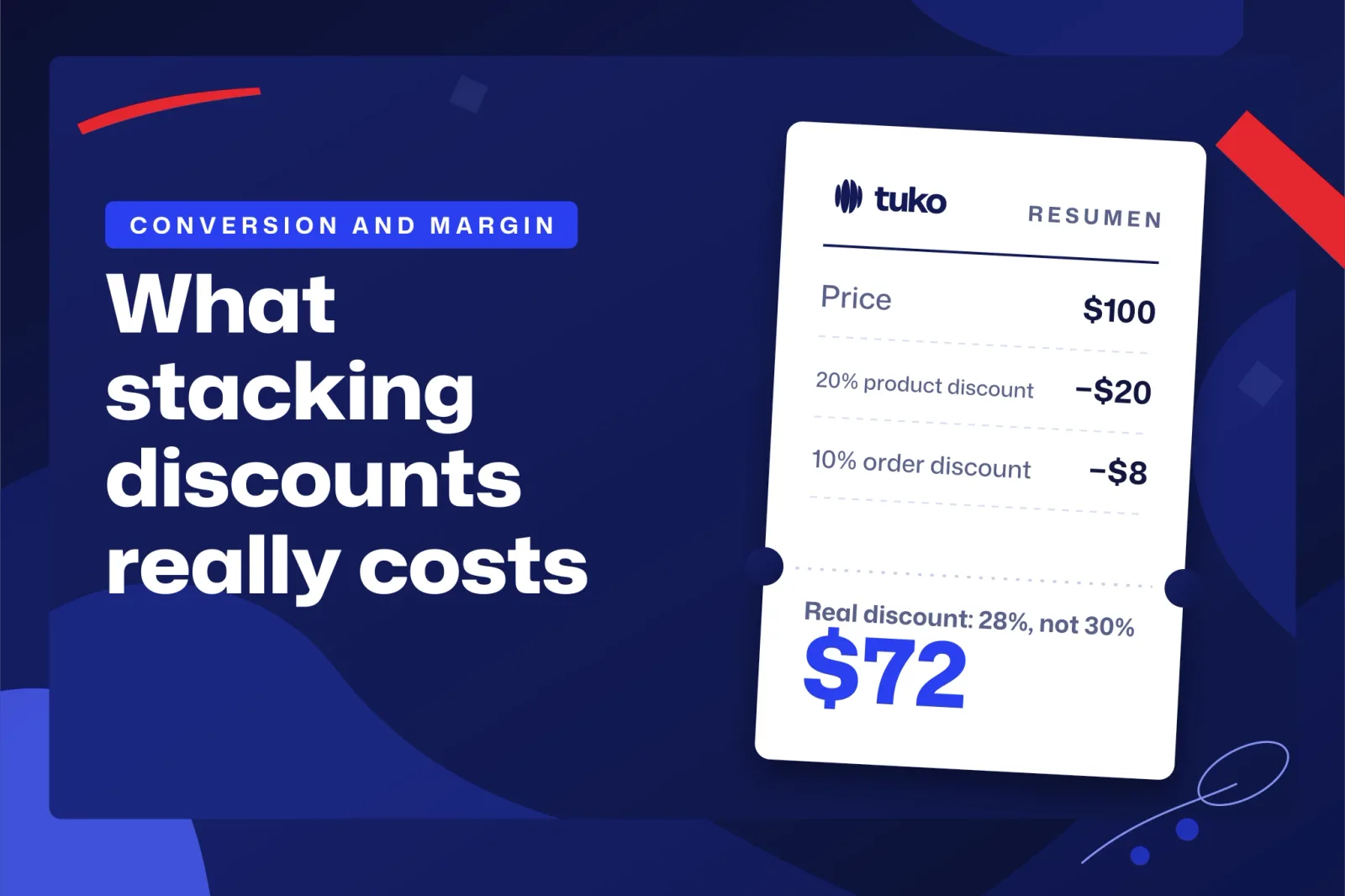
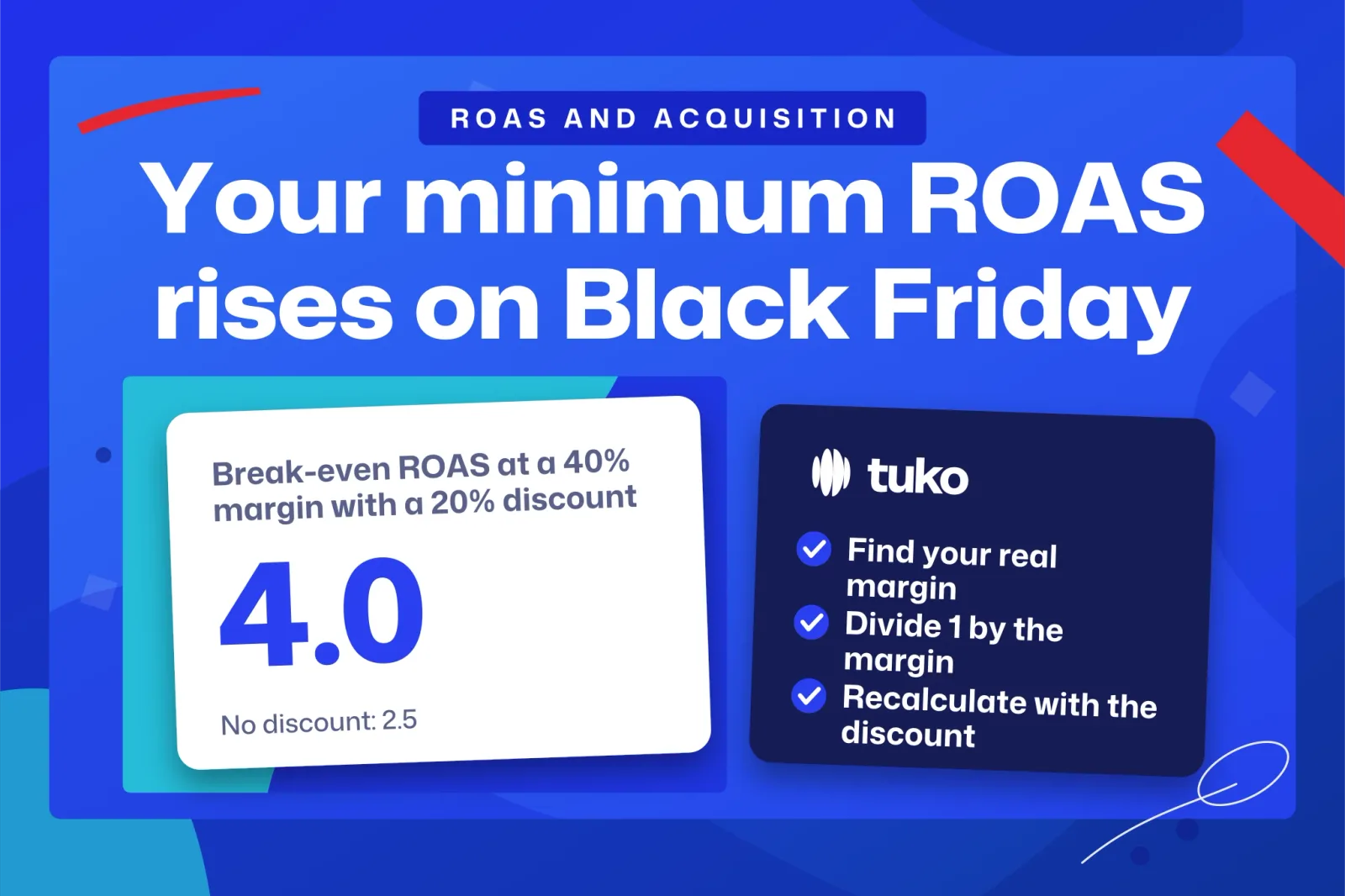
A Black Friday discount strategy pays off when the extra orders it brings, the ones that would not have happened anyway, cover the margin you give up. With a 40% contribution margin and a 20% discount, for example, you need twice as many orders just to earn the same. That is why the type of offer matters more than the percentage: some offers cut the price for everyone, others only in exchange for something. If you want the full math on how much to discount once ad spend is included, see how much discount to offer on Black Friday without losing margin.
Is discounting on Black Friday worth it?
Discounting on Black Friday is worth it if your margin can absorb the cut and the offer brings in buyers who were not coming otherwise. The weekend is big: according to Shopify's data published on December 2, 2025, its merchants generated $14.6 billion in global sales over Black Friday and Cyber Monday 2025, with an average cart price of $114.70. Shopify itself notes these figures are approximate and unaudited, and that its methodology can change from year to year. They give a sense of scale. What your store sells depends on your offer and your margins.
Black Friday always falls on the Friday after US Thanksgiving. In 2026 that is November 27, so your offer should be decided and set up in Shopify a few days earlier, leaving time to test checkout.
How many extra sales each discount needs to break even
The extra sales you need to stay level after a discount come from a short formula: m / (m − d) − 1, where m is your contribution margin on the original price and d is the discount. Contribution margin is what each sale leaves after product cost, shipping, payment fees and ad spend per order. If you are unsure about that last one, the guide on how to calculate break-even ROAS shows how to work it out.
The table applies the formula to common margin and discount combinations. All figures in this section are invented.
| Contribution margin | Discount | Extra sales needed |
|---|---|---|
| 30% | 10% | +50% |
| 40% | 10% | +33% |
| 40% | 20% | +100% |
| 40% | 30% | +300% |
| 50% | 20% | +67% |
| 50% | 30% | +150% |
| 60% | 20% | +50% |
| 60% | 30% | +100% |
Once the discount matches or exceeds your margin, no volume can save it: every order loses money. Running the numbers on gross margin, which only subtracts product cost, makes the result look far too rosy, because you still pay for shipping and ads. At a real 40% margin, going from a 20% to a 30% discount triples the extra sales you need, from +100% to +300%.
The full breakdown, with advertising and cannibalization included, is in the guide on how much to discount on Black Friday.
The hidden cost of a sitewide sale: discounts paid to people who would have bought anyway
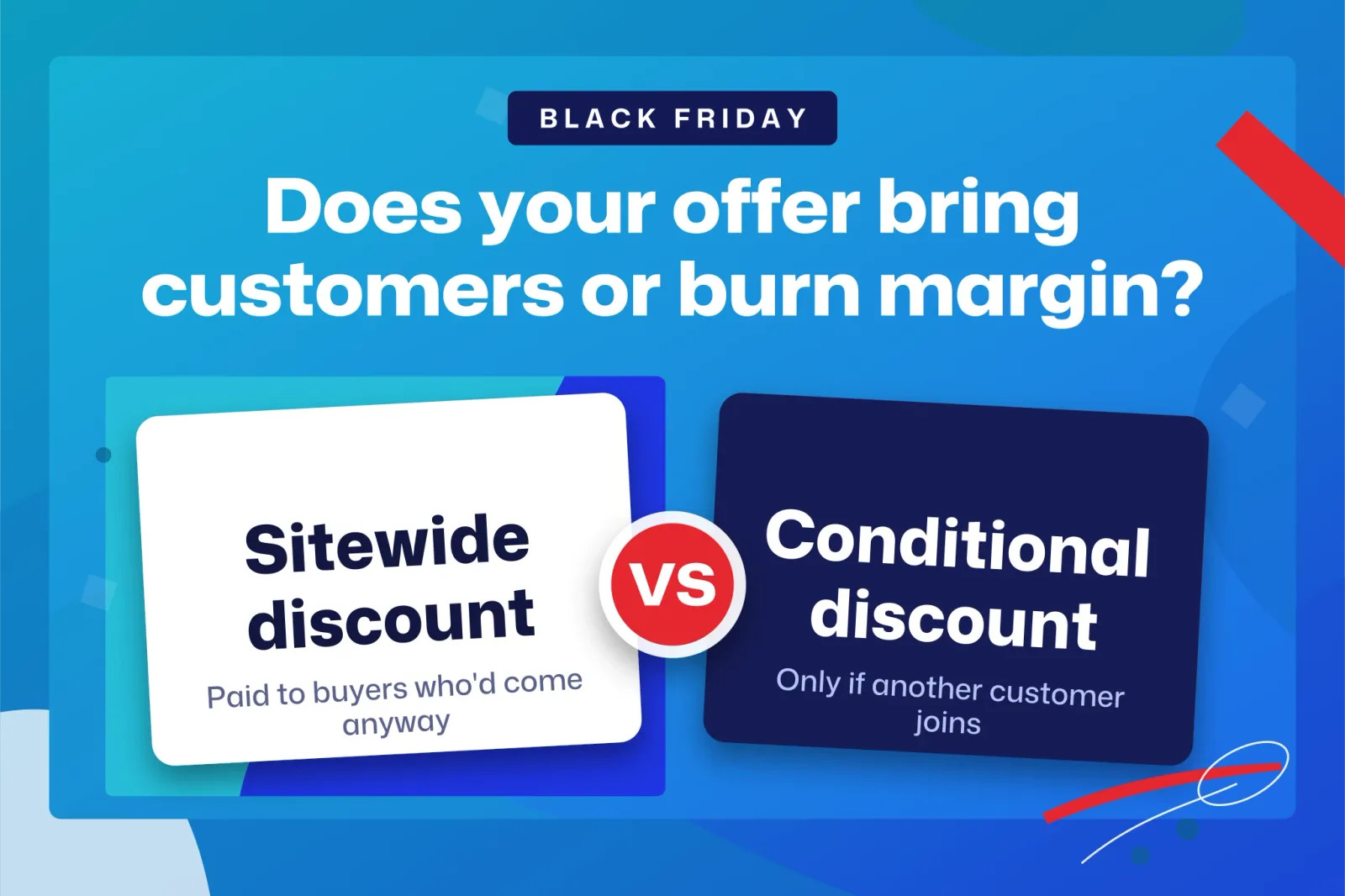
A sitewide discount also goes to every customer who would have bought at full price. That money comes straight out of your margin and brings no sale in return. The table above can't see it, because it counts orders without asking where they came from.
All figures in this section are invented. Say you sell a product at $100 with a $40 contribution margin, and on a normal stretch of days you would get 100 orders, worth $4,000 in margin. You run 20% off sitewide and get 150 orders, each leaving $20 of margin: $3,000 in total. Of those 150, 100 would have come anyway, and you handed them $2,000. The 50 new orders add $1,000. You sold 50% more and made $1,000 less.
Before picking an offer, work out who the discount will actually reach. Cannibalization gets its own section in how much discount to offer on Black Friday without losing margin; here it works as the yardstick for comparing the alternatives.
Alternatives to a sitewide discount, compared
The Black Friday offers that protect margin best attach a condition to the discount: buy more, spend more or bring someone. The table sorts them by who gets the discount, whether they grow your customer count or just units, and how much margin they put at risk. This is our judgment, not a measurement.
| Offer | Who gets the discount | What grows | Margin risk |
|---|---|---|---|
| Sitewide discount | Every buyer, including those who would have bought anyway | Orders, mixing new and returning customers | High |
| Discount on one to three specific products | Buyers of those products | Sales of those products; everything else stays full price | Medium, limited to those products |
| Bundle or buy X get Y | Buyers who take more units | Units per order, not customers | Medium, depending on the margin of the extra unit |
| Free shipping over a threshold | Buyers who reach the threshold | Order value | Low to medium, if the threshold sits above your usual cart |
| Gift with purchase | Buyers who meet the gift condition | Order value or conversion | Low, if the gift is cheap and useful |
| Early access by email for existing customers | Your customers, who already know you | Repeat purchases; no new customers | Medium, since many would have come back anyway |
| Discount conditional on bringing another customer (group buying) | The buyer who brings someone, and that person | New customers | Low to medium: every discount arrives with another order |
None of these is bad in itself. Bundles and free shipping raise the order value of people already buying, and early access rewards your loyal customers. Only the last row makes the discount depend on someone new showing up. They stack well together: a bundle gets one customer to buy more units, and group buying gets more customers through the door.
We have a stake here, because Tuko is a Shopify app that adds a group buy button to the product page. The customer pays with the discount already applied in the store's normal checkout and has 24 hours, or 48 if the store prefers, for another person to join, for example through a link shared on WhatsApp. Each order is individual and ships to each customer's own address. Nobody gets the lower price without bringing in another customer. Tuko lives inside your store and works on your products, so it has nothing in common with a coupon site; what group buying is and how it differs from Groupon covers the difference.
The limit of this approach is that it relies on your customers sharing the link, and it makes sense that it works best with products people enjoy recommending. If the group doesn't fill, the order doesn't ship, and the customer chooses between keeping the missing units at the group price, moving to another open group for the same product, or getting their money back.
How to stack Black Friday offers in Shopify without conflicts
Shopify lets you combine discounts under rules worth checking before the campaign goes live. According to Shopify Help on discount combinations, consulted in November 2026, discounts fall into three classes: product, order and shipping. Which classes can stack depends on your store.
| Combination | Who can use it |
|---|---|
| Order with free shipping | All merchants |
| Product with free shipping | All merchants |
| Product with product, on separate items | All merchants |
| Product with order | Eligible merchants only |
| Order with order | Eligible merchants only |
| Product with product, on the same line item | Shopify Plus only |
The same Shopify Help page sets two quantity limits. A store can have at most 25 active automatic discounts, and that total includes app-based discounts. On a single order, a customer can use at most 5 product or order discount codes and 1 shipping discount code. Combinations only work on the Online Store, the Storefront API and Shopify POS, so if you sell through other channels, check how your offers behave there first.
For a bundle, buy X get Y can be set up as an automatic discount: per Shopify Help on automatic discounts, it applies to the cart on its own once the customer meets the purchase requirements. For tiered, multi-step or custom-requirement discounts, Shopify points you to discount apps or, on Shopify Plus, to Checkout Blocks.
Before Black Friday, list every offer you plan to run at the same time, mark each one's class and check the table to see whether they can coexist. Then place a test order for every combination you expect customers to use.
Checklist for planning your Black Friday campaign
- Work out the contribution margin of each product on offer: price minus cost, shipping, fees and ad spend per order.
- Find in the extra sales table the discount your margin can handle, and drop any that demand volume you won't reach.
- Decide who you want the discount to go to and pick the matching offer from the alternatives table.
- Confirm the offers you plan to combine can coexist in Shopify and that you stay under 25 active automatic discounts.
- Use the formula to set an order target and write it down before launch.
- When the campaign ends, compare orders against a normal period and split new customers from returning ones to see which sales were truly incremental.
If your campaign involves reference prices, sale pricing rules or terms of sale, check with a professional before publishing it.
Sell more on Black Friday without handing margin to people who were buying anyway
Start today with the contribution margin of your best sellers and check the table for the discount each one can carry. If you want part of your offer to depend on new customers arriving, you can install Tuko from the Shopify App Store. Setup takes about two minutes, you don't touch your theme and you don't need Shopify Plus. You pick the products and the group discount, and the rest of your campaign stays as you planned it.